LEARNER NEEDS ANALYSIS
Understanding Barriers to Collaborative Participation
THE CHALLENGE
This project addressed the challenge of creating inclusive participation in group discussions. In diverse learning environments, a small number of participants may dominate the conversation, while others contribute less or remain silent. Anonymous digital participation offered one potential solution. However, whether learners would welcome this design approach was still unknown.
MY ROLE & TOOLS
MY PROCESS
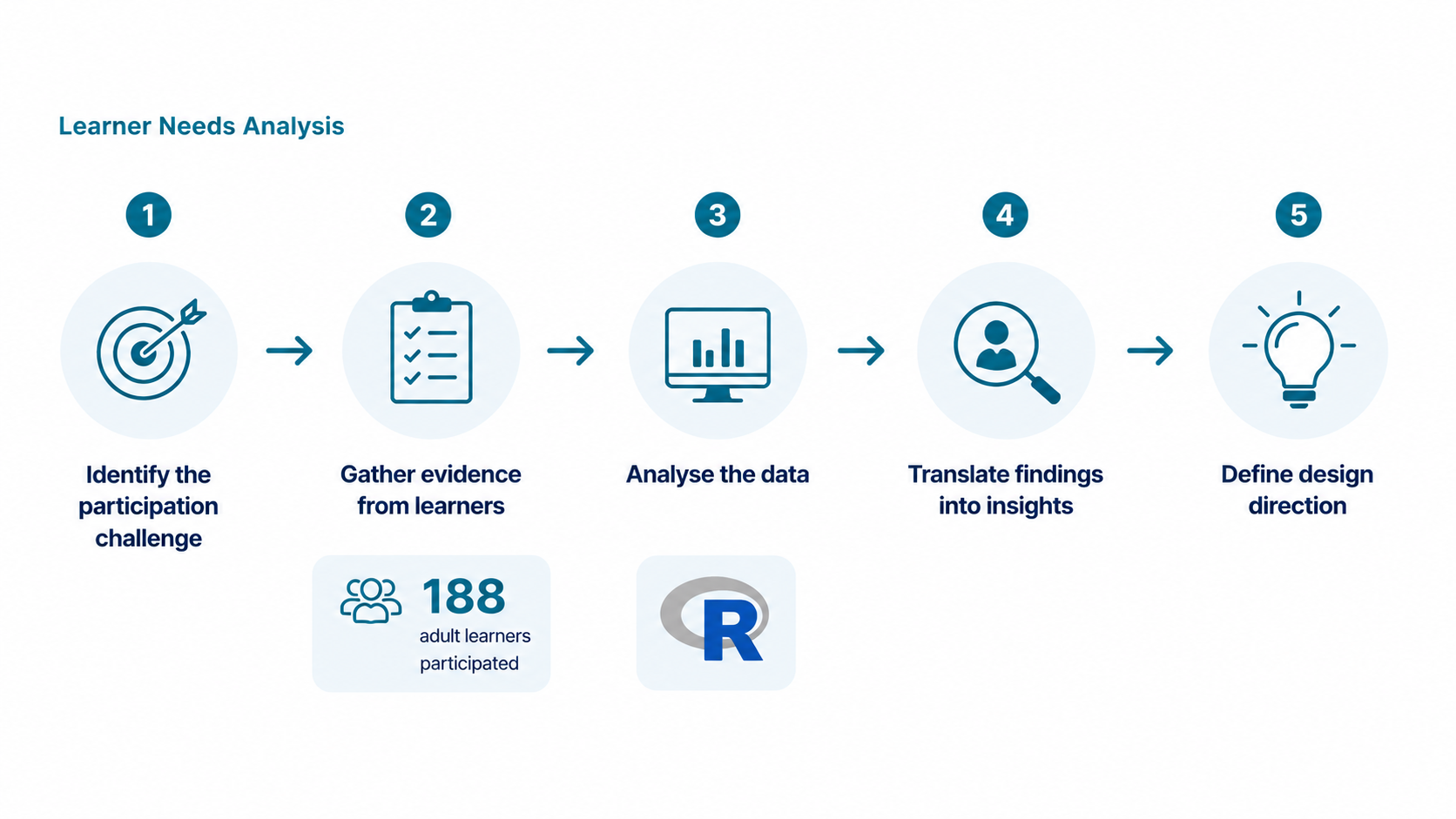
Rather than designing a solution immediately, I first needed to understand whether anonymous digital discussion was a genuine fit for learners. I therefore conducted a learner needs analysis to establish clear design requirements before developing the solution.
Using an online survey, I gathered evidence from 188 adult learners about their experiences and perceptions of digital participation, anonymous discussion, and current facilitation practices.
I analysed the data in R to identify participation patterns and learner needs, then translated the findings into evidence-informed design decisions that shaped the subsequent learning experience.
KEY FINDINGS & DESIGN IMPLICATIONS
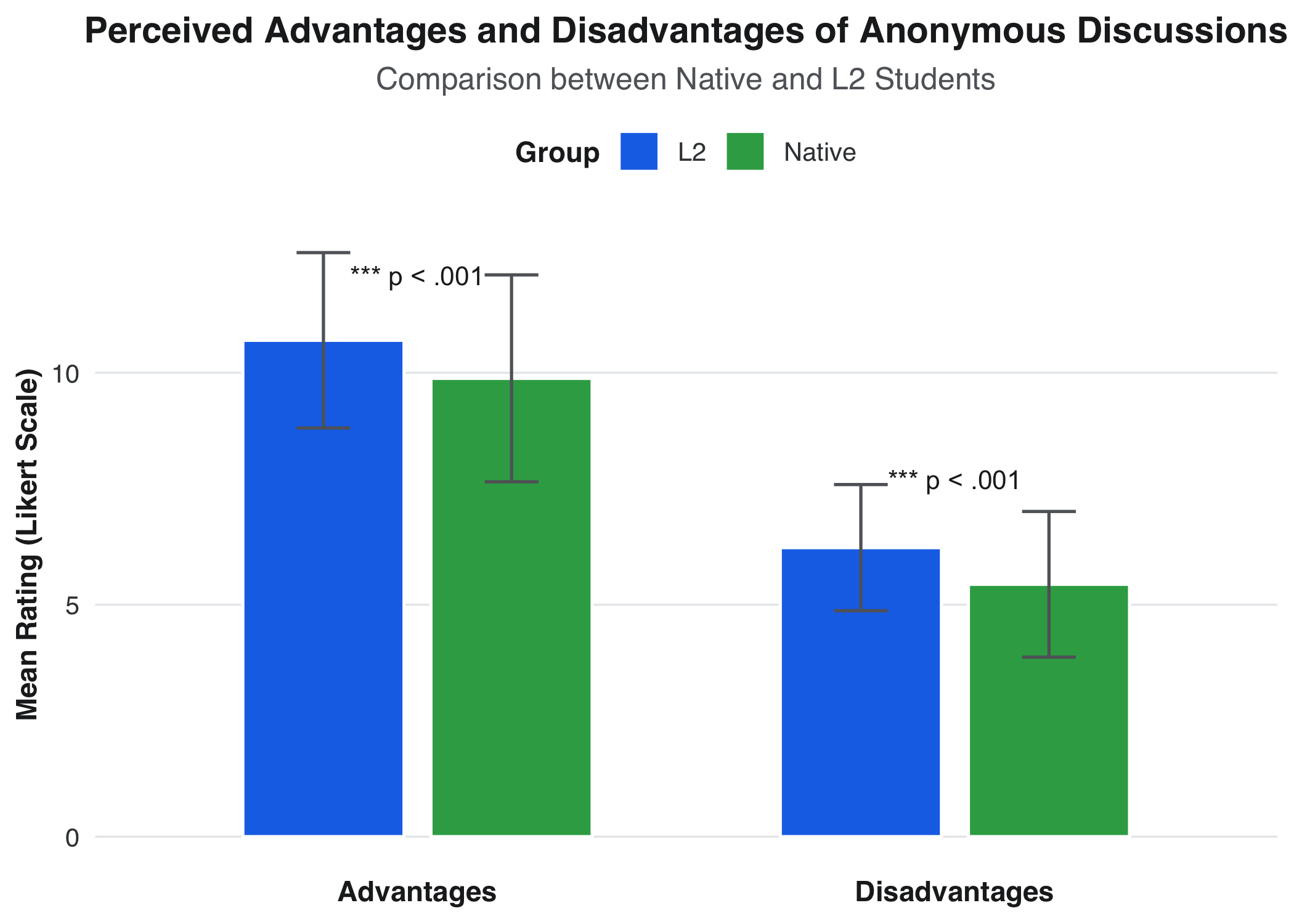
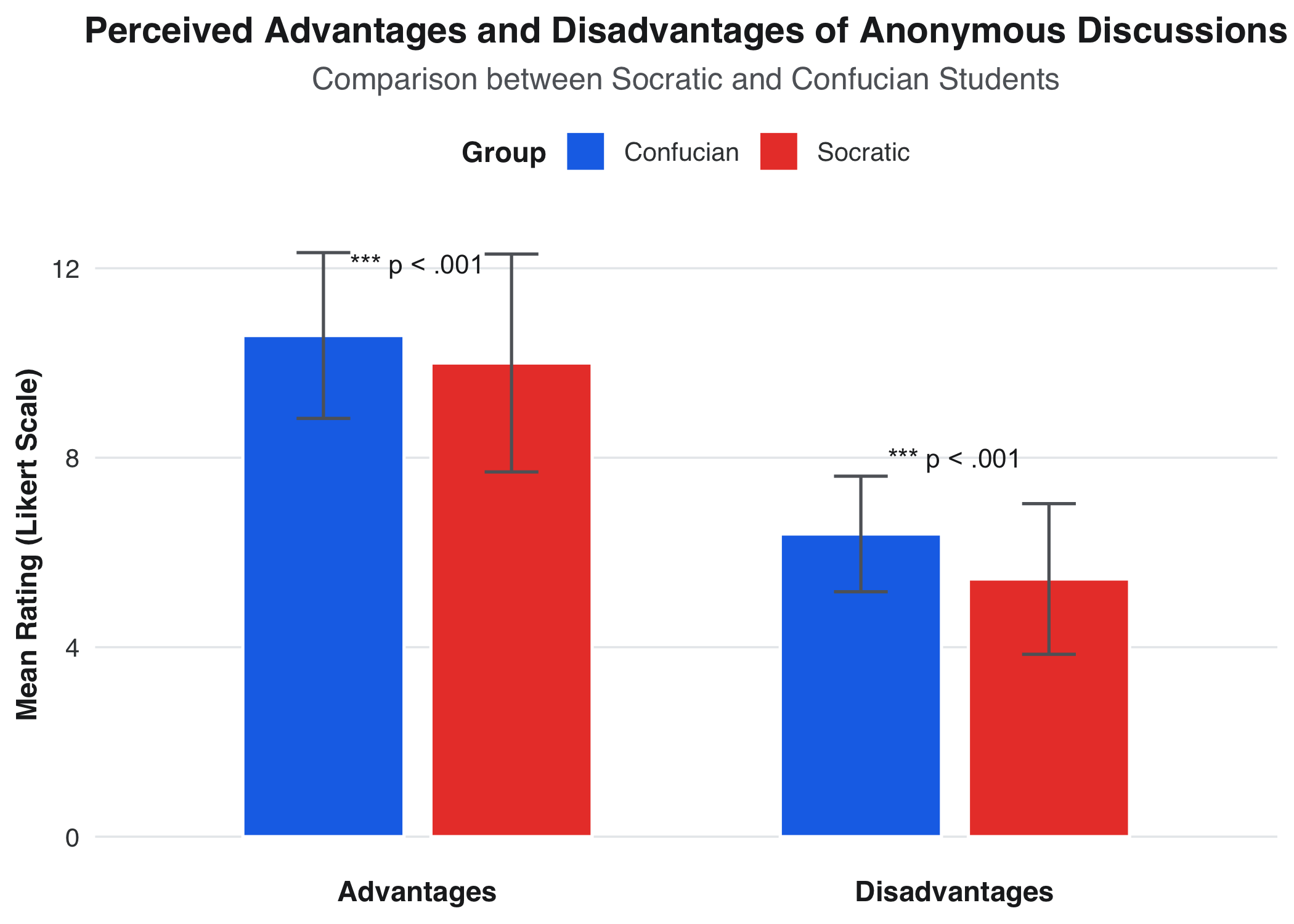
The findings showed that learners were generally open to using anonymity in group discussions. Second-language users were more positive about anonymous written discussion than native English speakers. Learners from cultural backgrounds where classroom participation is traditionally more listener-oriented, such as Confucian-heritage educational traditions, were also more positive than learners from more discussion-based educational backgrounds.
The findings pointed to a broader design principle: offering multiple ways to participate, rather than assuming one mode works equally well for everyone. With this direction established, I moved on to developing a stakeholder-facing course designed to build a shared understanding of anonymity as a potential response to uneven learner participation.