RISE 360 EXAMPLE
Designing Inclusive Discussions: When Can Anonymity Help?
THE CHALLENGE
The learner needs analysis identified anonymous digital discussion as a promising way to broaden participation in collaborative discussions. However, many stakeholders were unfamiliar with the approach and unsure when or how to use it effectively.
Before implementation, stakeholders needed a practical understanding of the approach to adopt it with confidence. The design challenge was therefore to translate a complex body of research into a concise, practical learning experience that enabled them to make informed design decisions without requiring expertise in the underlying theory.
MY ROLE & TOOLS
MY PROCESS
I reviewed the research on anonymity and distilled it into a concise, practical learning experience designed to help stakeholders decide whether, when and how anonymity could support collaborative learning.
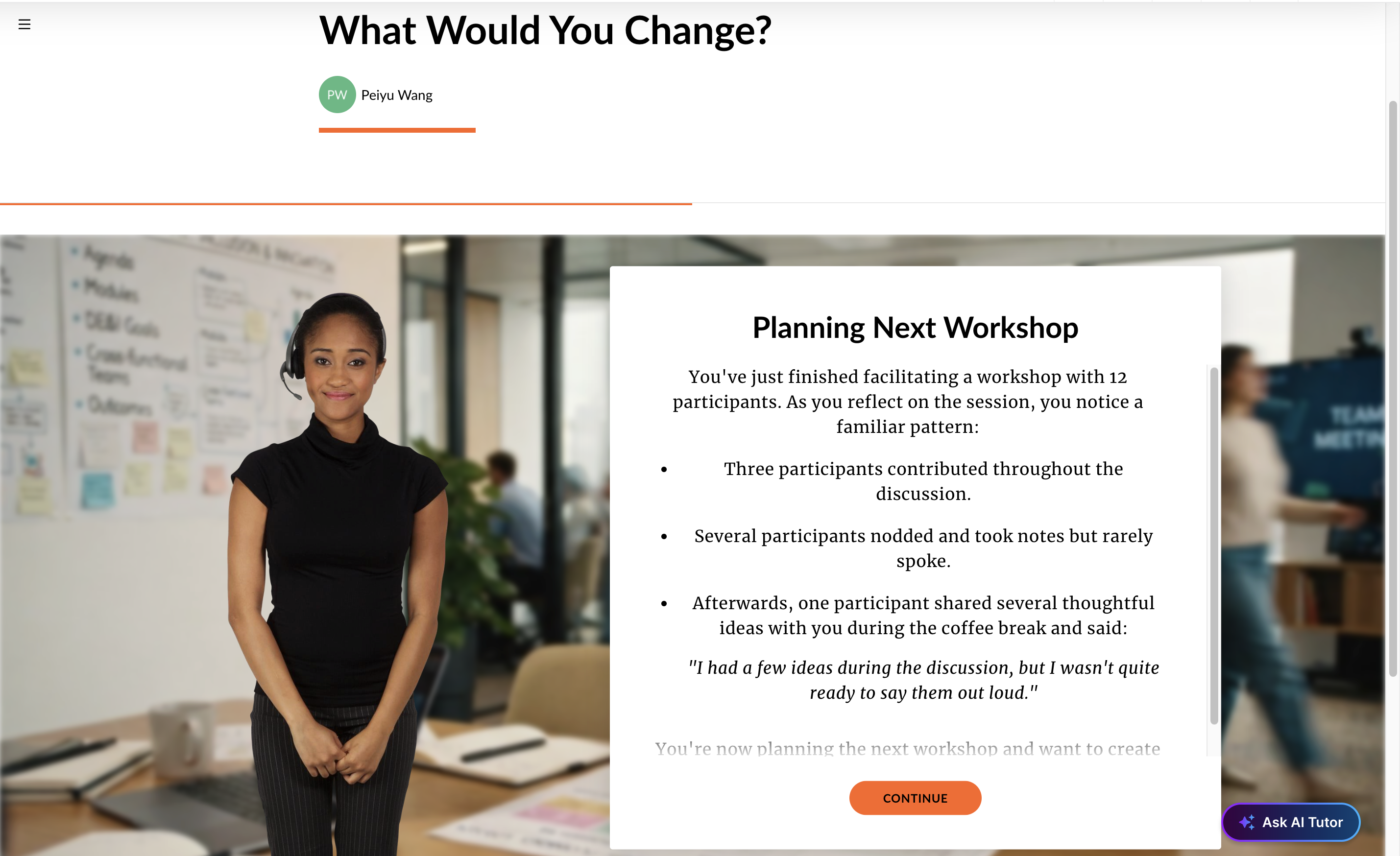
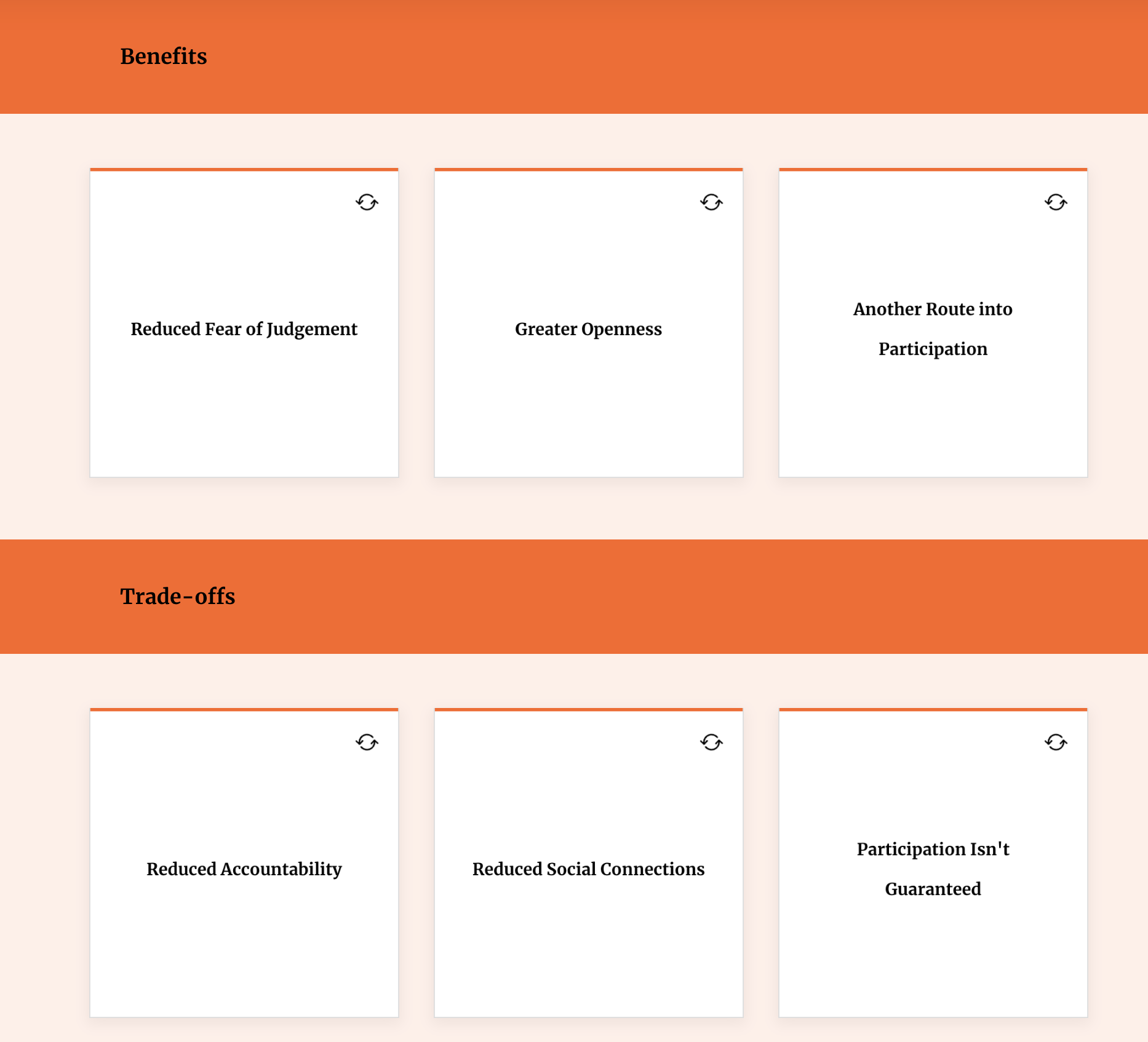
Rather than opening with definitions or theory, I began with an authentic workshop scenario that connected the new concept to situations stakeholders may already have encountered. Learners then explore what anonymity is and the different forms it can take before examining why it may influence participation, evaluating its benefits and trade-offs, and finally applying these ideas to realistic facilitation scenarios. This scaffolded progression moves learners from foundational understanding to increasingly independent design decisions.
I combined concise explanations with interactive Rise components for concept exploration and scenario-based activities that encouraged learners to consider how learner needs, learning objectives and teaching context influence design decisions. Knowledge checks provide explanatory feedback, reinforcing the reasoning behind each decision rather than simply confirming whether an answer is correct.
Throughout the course, anonymity is presented as a design choice rather than a universal solution, encouraging stakeholders to consider learner needs and context when deciding whether and how to use it. The course concludes with a five-question decision framework that stakeholders can use beyond the course, supporting the transfer of learning into future facilitation and learning design practice.
COURSE VIDEO
VIEW INTERACTIVE COURSE ↗THE IMPACT
The course successfully informed implementation across four programmes involving eight stakeholders and established a shared framework for deciding whether, when and how anonymity could support collaborative learning. This framework informed subsequent learning design decisions beyond the original implementation.